Emergency Services
- First Nations support @ Yarning SafeNStrong – 1800 959 563
- Beyond Blue – 1300 22 4636
- Lifeline – 13 11 14
- Grief Australia – 1800 642 066 or 03 9265 2100
- The Compassionate Friends Victoria (TCFV) grief support– 1300 064 068 or 03 9888 4944
- Suicide Line – 1300 651 251
- Suicide Call Back Service – 1300 659 467
- LGBTIQA+ support @ Q-Life – 1800 184 527
- Kids Helpline – 1800 55 1800
- Translation and Interpreting Services – 13 14 50
Acknowledgement
Thinking Healthy and John Julian acknowledge the Traditional Custodians of the Boon Wurrung land on which we live and work today and pay respects to their Elders past, present and emerging. We also acknowledge that the Boon Wurrung people never ceded their land.
Free meditations
MANA offeres free meditations occur internationally at AEST 10 am (5 pm PT) over winter in Australia occur everyday except Sunday when it is a 2 - hour class starting at 9 am AEST 4 pm PT). John is present for these on Monday, Wednesday, Friday and Sunday. See the Mindfulness and Nature Association (MANA) website for more details: mindfulnessandnature.com.au
Interviews
NOW ACCEPTING NEW CLIENTS.
We are currently accepting referrals for new clients for one-to-one counselling and relationship counselling. (Note that Relationship Counselling may not be covered by Medicare MHCP's). John has also now appointed an Associate Counsellor, Joanna Walz, who he is mentoring - see below for details.
We offer services (one-to-one counselling, relationship counselling and groups) through Teams or Zoom, and face to face. A monthly Day of Mindfulness is also held and advertsied through MANA Inc: https://www.mindfulnessandnature.com.au/events
We currently finished our group programs for the year. h
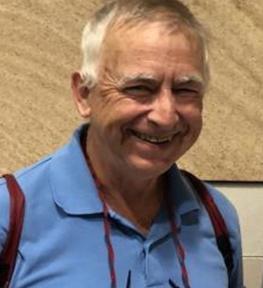
With over four decades (47 years) of experience in mental health and counselling, I offer a grounded and deeply informed therapeutic approach that integrates cognitive behavioural therapy, mindfulness, and compassion-based practices including Compassionate Mind Training. Humour also has an essential place in these recovery preactices. Since 1978, I’ve worked with individuals facing anxiety, depression, grief, PTSD, and life transitions, drawing on both evidence-based techniques and the wisdom of mindfulness traditions. As a Medicare-accredited social worker, certified Mindful Self-Compassion teacher, and experienced trainer with over 25 years of experience in mental health education and mindfulness, I provide a safe, respectful space for reflection, healing, and personal growth. See below for the modalities that John and Joanna use.
John has also held senior positions in mental health, being the Social Work Advisor to the Mental Health Authority in the Health Commission of Victoria in the mid 1980's, and the inaugural Executive Director of the Peak Mental Health NGO body, VICSERV. He commenced a small private practice in 1988. He later became one of the most senior mental health trainers in the State being the Manager of LAMPS and the senior trainer. In this position, he was responsible for the training of specialist mental health staff and the management, coordination and development of a complex multi-player training environment involving high-level training activities across one-third of Victoria.
The Three Parts of Therapy (incl. CBT, CFT & IPNB Integration)
If you have already completed some of these stages, we are happy to offer the treament or related wellness approaches after an assessment.
-
Support and Stabilisation
The first step is creating safety and stability. This includes reducing distress, learning grounding skills, and strengthening everyday routines so that you feel more resourced and less overwhelmed. Without this foundation, deeper work can feel unsafe or unmanageable (Herman, 1992; Cloitre et al., 2012).-
In CFT, this is understood through the soothing system—cultivating compassionate presence to balance the drive and threat systems, allowing a grounded sense of safeness (Gilbert, 2010).
-
In IPNB, this stage focuses on integration of states of arousal across brain and body, building regulatory capacity through relational safety and mindful awareness (Siegel, 2012, 2020).
-
-
Treatment for Specific Conditions
Once stabilisation is in place, therapy can focus on targeted treatment of particular difficulties—such as trauma, anxiety, depression, pain, or other mental health challenges. Evidence-based approaches are adapted to each person’s unique patterns (American Psychological Association, 2017; Barlow, 2014).-
CFT addresses shame, harsh inner voices, and trauma by fostering affiliative and compassionate forms of awareness that regulate emotion and soften critical patterns (Gilbert, 2010).
-
IPNB frames treatment as the integration of memory, emotion, and narrative. Through therapeutic presence and attunement, new connections are formed that enable flexibility, coherence, and reorganisation of the mind (Siegel, 2012, 2020).
-
-
Wellness Therapy
The third stage is often overlooked but critically important. Wellness therapy focuses on growth, resilience, and flourishing. It helps minimise relapse and sustains wellbeing—for each person and the wider relational world. This stage is about cultivating meaning, purpose, connection, and practices that allow being to thrive rather than merely survive (Keyes, 2007; Seligman, 2011).-
CFT supports wellness by strengthening compassionate motivation toward one’s being and toward others, fostering prosocial orientation and purpose (Gilbert, 2017).
-
IPNB emphasises the integration of differentiated parts of our being into a coherent, flexible whole. Siegel (2020) describes this as developing secure attachment, mindful presence, and the “MWe” identity—a lived sense of interconnectedness that transcends the illusion of a separate self.
-
Regular Practice to Support Integration Across All Stages
Therapy also encourages the development of regular practices that sustain integration and deepen progress. These include:
-
Relaxation and calming practices (paced breathing, body scans, progressive relaxation), which down-regulate the threat system and stabilise arousal (Benson, 2000).
-
Sitting mindfulness practices (breath awareness, open monitoring), which strengthen clarity, regulation, and the integration of awareness across experience (Kabat-Zinn, 1990; Creswell, 2017).
-
Moving mindfulness practices (qigong, tai chi), which weave together body, breath, and presence, shown to improve mood, balance, and wellbeing (Larkey et al., 2009; Payne & Crane-Godreau, 2013).
These practices serve as everyday vehicles of integration—uniting body, mind, and relationships; balancing compassion, drive, and protection systems; and embedding wellness into daily living.
Relationship counselling is also offered and we provided therapy based on the evidence-based Gottman techniques.
References
-
American Psychological Association. (2017). Clinical practice guideline for the treatment of posttraumatic stress disorder (PTSD) in adults. Washington, DC: APA.
-
Barlow, D. H. (2014). Clinical handbook of psychological disorders: A step-by-step treatment manual (5th ed.). New York, NY: Guilford Press.
-
Benson, H. (2000). The relaxation response. New York, NY: HarperTorch.
-
Cloitre, M., Courtois, C. A., Charuvastra, A., Carapezza, R., Stolbach, B. C., & Green, B. L. (2012). Treatment of complex PTSD: Results of the ISTSS expert clinician survey on best practices. Journal of Traumatic Stress, 24(6), 615–627. https://doi.org/10.1002/jts.20742
-
Creswell, J. D. (2017). Mindfulness interventions. Annual Review of Psychology, 68, 491–516. https://doi.org/10.1146/annurev-psych-042716-051139
-
Gilbert, P. (2010). Compassion focused therapy: Distinctive features. London, UK: Routledge.
-
Gilbert, P. (2017). Compassion as a social mentality: An evolutionary approach. Frontiers in Psychology, 8, 647. https://doi.org/10.3389/fpsyg.2017.00647
-
Herman, J. L. (1992). Trauma and recovery: The aftermath of violence—from domestic abuse to political terror. New York, NY: Basic Books.
-
Kabat-Zinn, J. (1990). Full catastrophe living: Using the wisdom of your body and mind to face stress, pain, and illness. New York, NY: Delacorte.
-
Keyes, C. L. M. (2007). Promoting and protecting mental health as flourishing: A complementary strategy for improving national mental health. American Psychologist, 62(2), 95–108. https://doi.org/10.1037/0003-066X.62.2.95
-
Larkey, L., Jahnke, R., Etnier, J., & Gonzalez, J. (2009). Meditative movement as a category of exercise: Implications for research. Journal of Physical Activity and Health, 6(2), 230–238. https://doi.org/10.1123/jpah.6.2.230
-
Payne, P., & Crane-Godreau, M. A. (2013). Meditative movement for depression and anxiety. Frontiers in Psychiatry, 4, 71. https://doi.org/10.3389/fpsyt.2013.00071
-
Seligman, M. E. P. (2011). Flourish: A visionary new understanding of happiness and well-being. New York, NY: Free Press.
-
Siegel, D. J. (2012). The developing mind: How relationships and the brain interact to shape who we are (2nd ed.). New York, NY: Guilford Press.
-
Siegel, D. J. (2020). The developing mind: How relationships and the brain interact to shape who we are (3rd ed.). New York, NY: Guilford Press.
Supporting Continuity Through Mentorship
To ensure long-term care for existing and future clients, John has appointed an associate counsellor, Joanna Walz, who is currently being mentored over a five-year period. Joanna is on a pathway to becoming an accredited Mental Health Social Worker and is being closely supported to uphold the same compassionate, trauma-informed, and evidence-based values that underpin all Thinking Healthy services. Joanna bring a broad range of skills, life experience, intelligence and compassion with her. John will continue to see all clients who wish to see just him.
This mentoring process ensures that:
-
Clients will continue to receive quality care rooted in compassion and relational integrity.
-
There is continuity for past clients who may return (and John will remain open to see these people beyond the five year period as he is able).
-
The knowledge and ethos of this practice are passed on to the next generation of therapeutic practitioners.
Expanded Services
In addition to individual psychotherapy and group programs, we are now offering relationship counselling.
Both John and Joanna have undertaken professional training with the Gottman Institute, a leading evidence-based approach to couple relationships. These sessions can support couples in improving communication, repairing relational ruptures, deepening trust, and working through long-standing patterns of conflict or disconnection.
Summary of Counselling Approaches and Skills Used.
John Julian is an Accredited Mental Health Social Worker with over 45 years of experience integrating evidence-based modalities with compassion-centred, nature-based, and trauma-informed care. In combination with Joanna, the counselling approaches used are relational, insight-oriented, grounded in compassion motivation as well as scientific understanding and lived human experience.
Primary Therapeutic Approaches:
-
Compassion-Focused Therapy (CFT):
Grounded in evolutionary theory, attachment, and affective neuroscience, CFT informs much of John’s work with individuals experiencing shame, self-criticism, trauma, or disconnection. Emphasis is placed on developing the compassionate self, working with the three-circle model (threat, drive, soothing), and building emotional regulation through safeness. -
Cognitive Behavioural Therapy (CBT):
John uses standard and modified CBT approaches, including schema identification, challenging cognitive distortions, and promoting adaptive behavioural strategies. For some clients, he integrates longer-term CBT protocols aimed at relapse prevention and life re-engagement. -
Mindfulness and Self-Compassion Practices:
Drawing from the Mindful Self-Compassion (MSC) program, Interpersonal Neurobiology (IPNB), and the Plum Village tradition (e.g., the 16 Steps of Mindfulness), John incorporates somatic awareness, breath-based techniques, and kindness-based practices to promote nervous system regulation and presence. -
Attachment-Based and Trauma-Informed Therapy:
John’s work is deeply influenced by early life experiences, relational dynamics, and patterns of emotional regulation. He works with clients to explore attachment styles and their impact on current relationships, self-worth, and meaning-making. -
Nature-Based and Eco-Therapeutic Interventions:
Where appropriate, John uses nature-based metaphors, rituals, and practices to support healing. His work through the Mindfulness and Nature Association (MANA) brings attention to the psychological benefits of kinship with nature, including groundedness, sensory awareness, and connection beyond the self. -
Narrative and Meaning-Oriented Therapies:
Clients are invited to explore their life stories, core beliefs, and identity narratives. John encourages reflection on values, purpose, and existential concerns, particularly in the face of grief, disillusionment, or major life transitions. -
Emotion Regulation and Psychoeducation:
Drawing on Jaak Panksepp’s affective neuroscience and IPNB, John teaches clients to recognise and work with core emotional systems (e.g., RAGE, FEAR, CARE, PLAY, etc.) in ways that foster compassionate curiosity rather than avoidance or reactivity.